Block paving
Laid on a compacted base with a haunched edge, because the edge is what fails first.
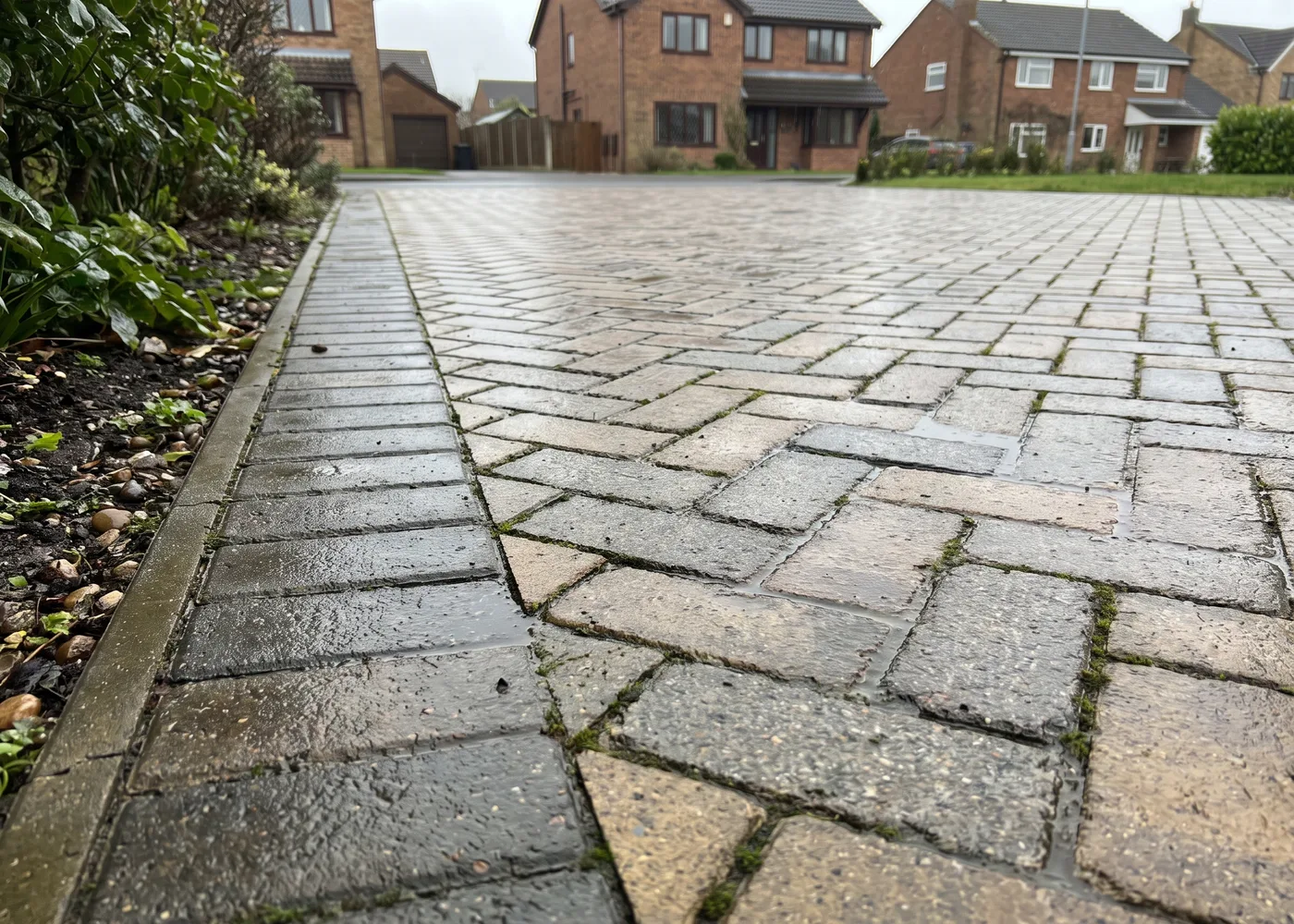
Block paving does not sink in the middle. It spreads at the sides, and then the middle drops to follow it. That is an edge restraint problem, not a block problem, and it is why every drive we lay gets a concrete haunch along every free edge before a single block goes down. It is the least visible part of the job and the part that decides whether it still looks laid in ten years.
A trial hole, not a glance
We dig a small hole at the first visit and look at what is under your drive. Clay, sand, or somebody else’s rubble. It takes ten minutes and it decides the price.
Drainage designed first
Where the water goes, what the falls are, and whether the job needs planning permission. Settled before anybody chooses a colour.
The quote, by depth
Itemised with the excavation depth and the sub-base thickness written on it. A quote without those two numbers is not comparable to anything.
Dig, base, edge
Excavate to the depth quoted, lay and compact the Type 1 in layers, then the concrete haunch to every free edge before a block is laid.
Surface and joint
Lay to the fall, cut the edges, kiln-dried sand brushed and vibrated in twice with a week between. Then we come back and do it a third time.
Asked often
Do I need planning permission for a new driveway?
How deep should the sub-base be?
Why does block paving sink?
Can you lay resin over my existing drive?
Resin bound surfacing
Permeable, seamless, and completely dependent on the base it is laid over.
Tarmac and repairs
New surfacing, overlays where an overlay is honest, and patching where it is not.
Drainage and groundwork
Falls, channels, soakaways and the paperwork that comes with paving a front garden.