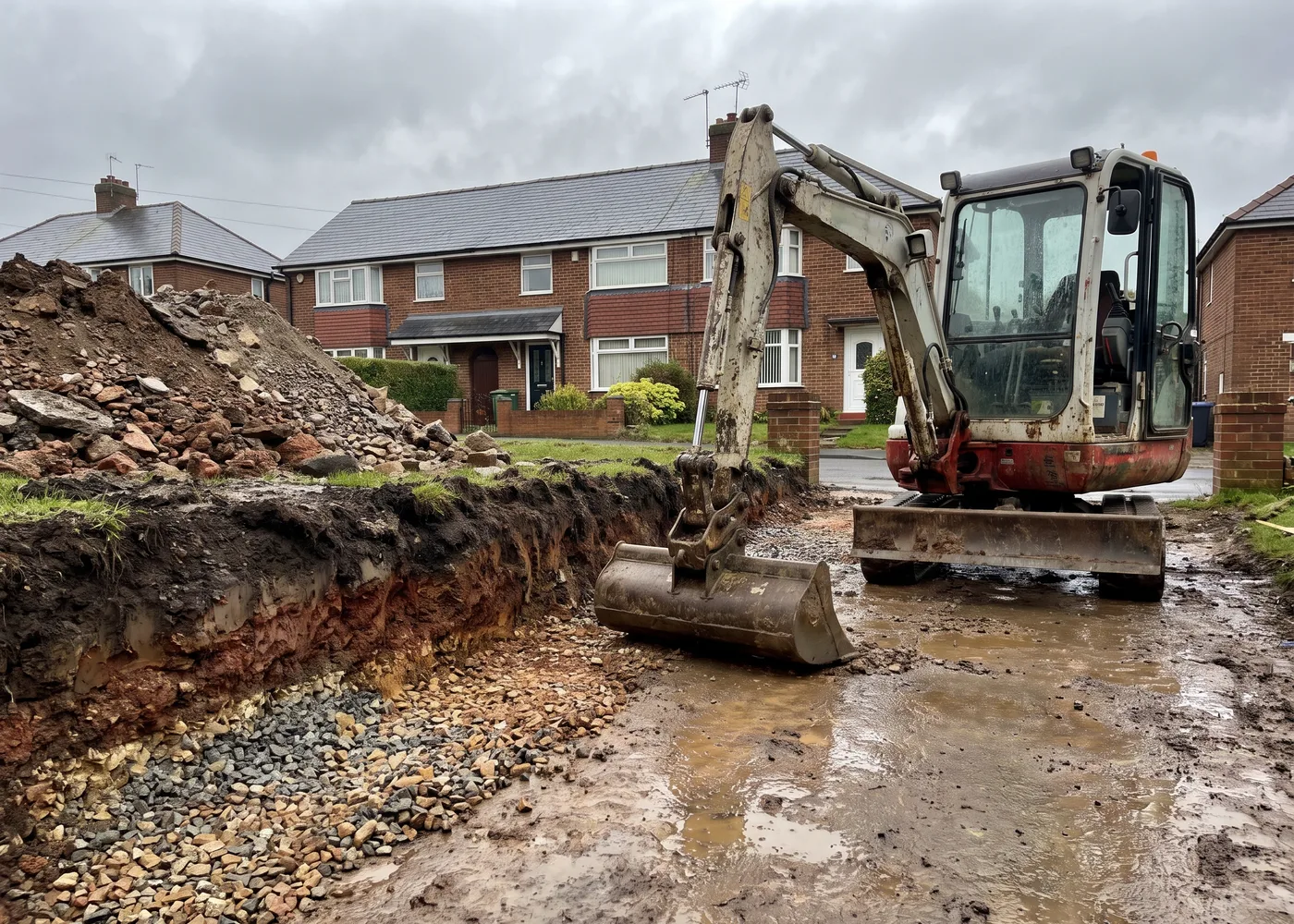
Falls, channels, soakaways and the paperwork that comes with paving a front garden.
Water has to go somewhere, and since 2008 where it goes is a planning matter. Over five square metres of impermeable surfacing in a front garden needs permission unless the water drains to a permeable area within your own boundary. We design the drainage first and the layout second, which is the opposite order to most quotes you will be given.
01A trial hole, not a glance
We dig a small hole at the first visit and look at what is under your drive. Clay, sand, or somebody else’s rubble. It takes ten minutes and it decides the price.
02Drainage designed first
Where the water goes, what the falls are, and whether the job needs planning permission. Settled before anybody chooses a colour.
03The quote, by depth
Itemised with the excavation depth and the sub-base thickness written on it. A quote without those two numbers is not comparable to anything.
04Dig, base, edge
Excavate to the depth quoted, lay and compact the Type 1 in layers, then the concrete haunch to every free edge before a block is laid.
05Surface and joint
Lay to the fall, cut the edges, kiln-dried sand brushed and vibrated in twice with a week between. Then we come back and do it a third time.
Asked often
Do I need planning permission for a new driveway?
If you are surfacing more than five square metres of front garden with something impermeable, and the water does not drain to a permeable area inside your own boundary, then yes. That has been the rule in England since October 2008 and it is the thing most quotes quietly ignore. Permeable block paving, gravel and resin bound over a permeable base all avoid it, as does directing the run-off to a border or a soakaway.
How deep should the sub-base be?
For a domestic car drive on reasonable ground, 100 to 150mm of compacted Type 1. Over clay, add 50mm and a geotextile membrane. For a van, a caravan or a horsebox, 200mm and upward. If a quote does not state a depth, it is not a quote you can compare with ours, and you should ask before you compare on price.
Why does block paving sink?
Almost always because the edges spread. Blocks are held by their neighbours, and at a free edge there is no neighbour, so without a concrete haunch the outer course creeps outward under every vehicle. Once there is a gap at the edge the whole field loosens and the middle settles into it. The base gets blamed and the edge was the cause.
Can you lay resin over my existing drive?
If the existing surface is sound tarmac or concrete with no movement, yes, and it is excellent value. If it is cracked, lifting or has been patched repeatedly, no. Resin bound is 15 to 18mm thick and has no structural strength: every crack underneath will reappear through it, usually within two winters. We will dig a trial hole and tell you which you have.